
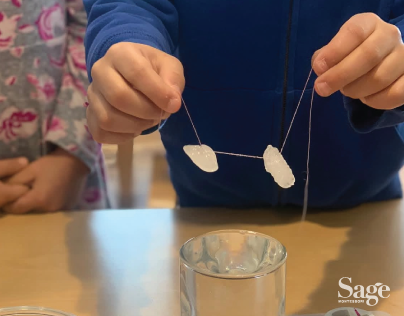
The Montessori Method is a century-old philosophy and method developed by Dr. Maria Montessori, a physician, scientist, and educator, during the first half of the 20th century. Dr. Montessori observed that children are naturally motivated to learn when they are placed in an environment that respect individual development and independence. When given freedom within clear boundaries, access to hands-on materials, and time to deep focus, children develop concentration, confidence, and a genuine love for learning.
In a traditional Montessori classroom, learning is hands-on and self-directed. Children are guided to choose work from thoughtfully prepared materials that help build focus, problem solving skills, and a firm academic foundation at their own pace. Mixed-age classrooms allow children to learn from each other in a natural and collaborative way.
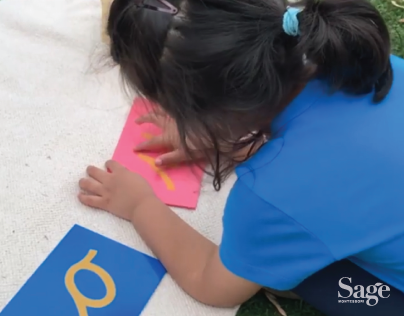
Teachers are referred to as guides who observe closely and offer individualized lessons based on a child’s readiness and developmental needs; a drastically different approach than large group instruction given to all children at the same time like in traditional classrooms.
As a micro-school, Sage Montessori’s small class size truly allows for this highly personalized form of learning to flourish while staying true to the core principles of authentic Montessori education.
At Sage, we also help young children learn about the world in ways that are honest, respectful, and age-appropriate. We intentionally select stories, materials, and lessons that reflect a wide range of people, cultures, and lived experiences, moving beyond narrow or dominant perspectives. This gentle work of decolonizing early learning is grounded in Montessori principles and carried out within a nurturing classroom environment, supporting the development of empathy, fairness, and respect.
In early childhood, decolonizing means offering a fuller and more truthful view of the world through careful choices in stories, geography, language, and everyday materials. Our goal is to help children grow with curiosity, compassion, and moral clarity, without introducing adult conflicts or ideas they are not yet ready to engage with.